

In the realm of avant-garde fashion, one item that has perpetually redefined sartorial norms is the Maison Martin Margiela Tabi boots. A triumph of unconventionality, these iconic split-toe boots emerged from the visionary mind of Belgian designer Martin Margiela in 1989.
The Tabi’s Inaugural Appearance
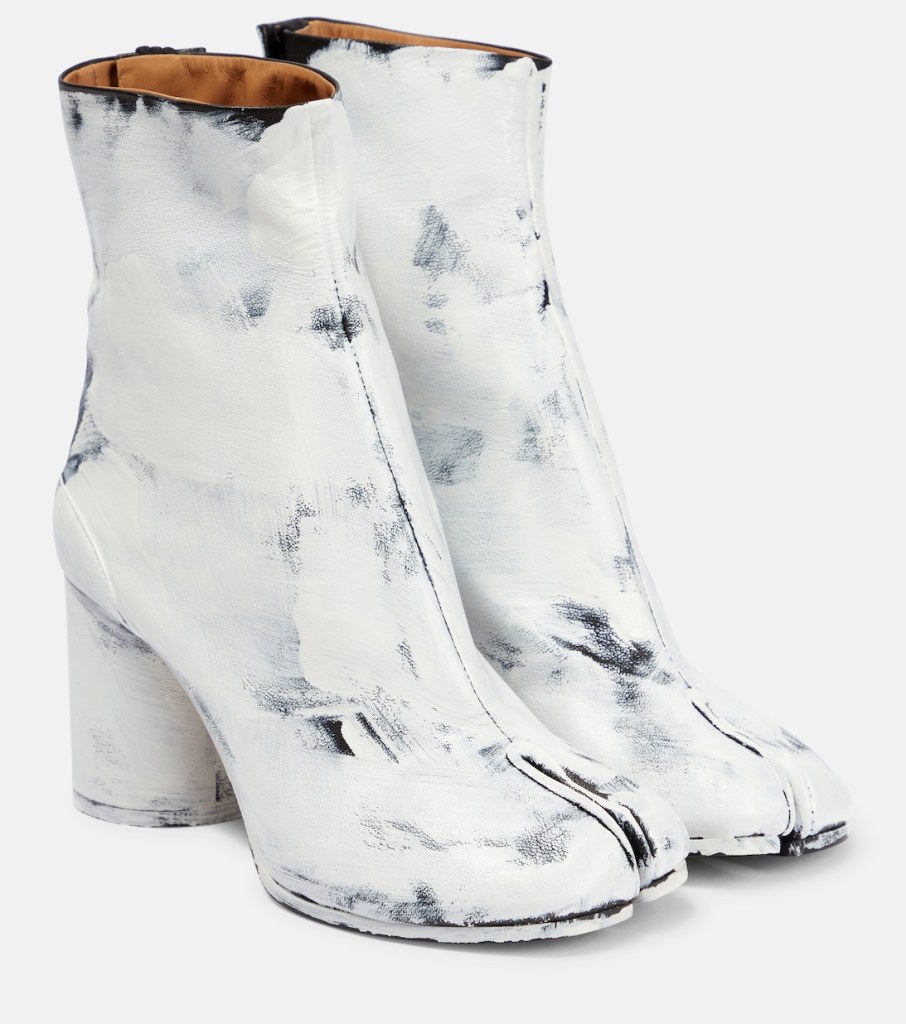
The Maison Martin Margiela Tabi boots made their inaugural appearance at the Spring/Summer 1989 collection. Daring, unorthodox, and unconventional, they showcased the hallmark split toe, an audacious interpretation of traditional Japanese Tabi footwear—an audacious choice for Western fashion.
The Polarizing Reception
Unveiled with audacity, the Tabi boots stirred a maelstrom of contrasting reactions. Some lauded them as a boundary-pushing departure from convention, a testament to Margiela’s desire to redefine aesthetics. Others found themselves befuddled, even scandalized, by their enigmatic form.
Cultural Provocateurs
In the intervening years, the Tabi boots have transcended mere fashion, evolving into a cultural symbol. Their inscrutable design, paradoxical silhouette, and inherent mystique have made them emblematic of rebellion against the fashion mainstream.
Contemporary Resonance
Fast forward to the present day, and the Tabi boots continue to captivate the avant-garde fashion world. They have been reimagined and reinterpreted by a multitude of designers and fashion houses, their split-toe design remaining an unmistakable badge of daring innovation.
In Conclusion
The Maison Martin Margiela Tabi boots stand as a testament to fashion’s audacity and innovation. They have shifted the paradigm of beauty and aesthetics, reminding us that fashion is not merely about following trends but also about shattering norms, etching an indelible signature upon the tapestry of style and design.

 Round One Magazine